Cloud architecture has spent years optimizing for efficiency. Shared kernels, multi-tenant clusters, centralized control planes, shared observability infrastructure, and pooled resources made cloud platforms cheaper and easier to operate at scale.
But the threat model is changing. The combination of increasingly powerful exploitation techniques, autonomous AI agents, and tightly coupled cloud infrastructure is making shared primitives more expensive to trust. The architectural response is a gradual shift from: “How much infrastructure can we safely share?” to: “What must remain isolated even when the surrounding system is compromised?” This is the beginning of an isolation-first architecture.
The Shared Infrastructure Assumption Is Breaking
Traditional cloud architecture relies heavily on shared infrastructure. A simplified model looks like this:
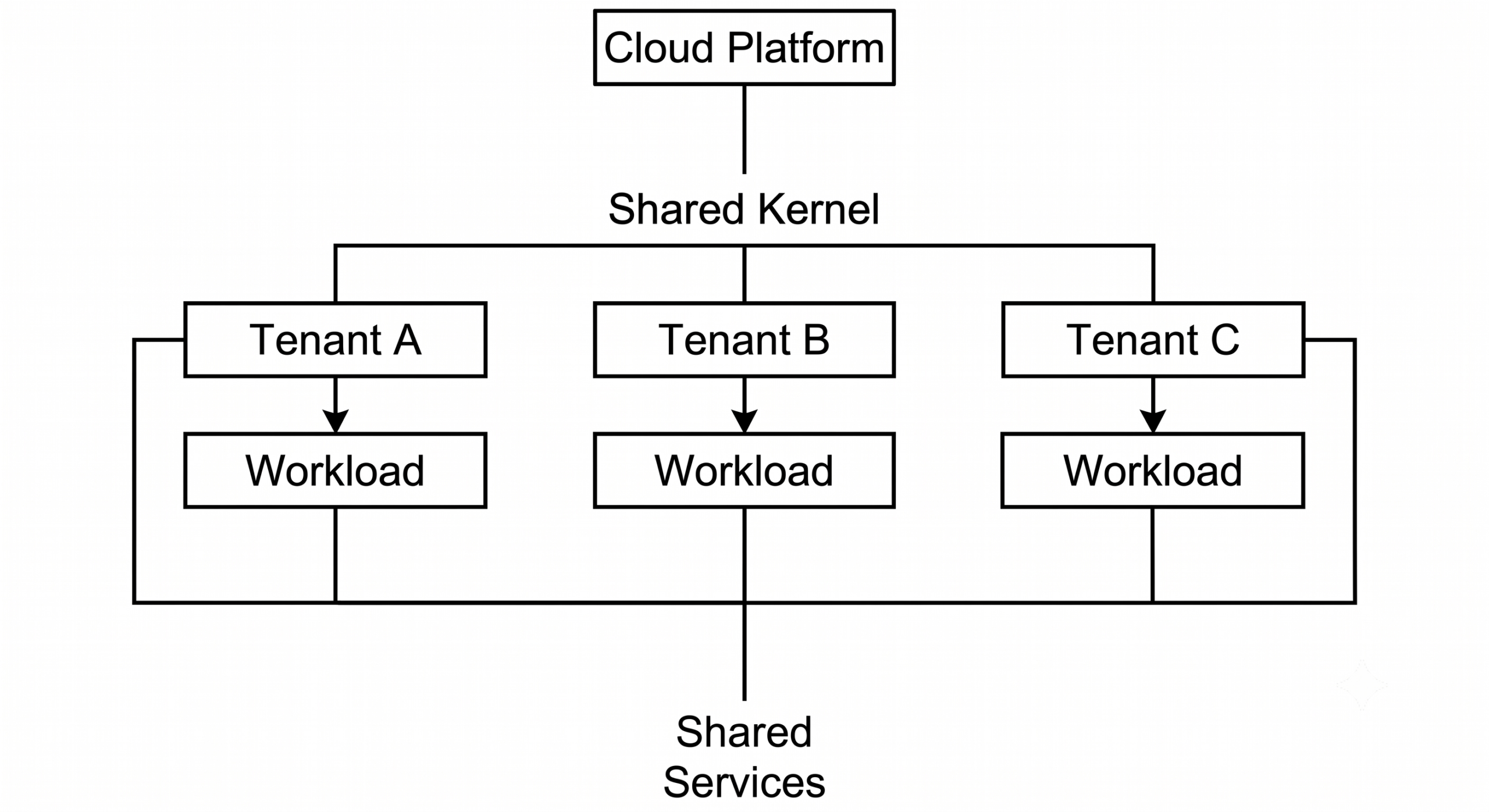
This model is efficient. It reduces infrastructure duplication, improves utilization, and makes large-scale platforms economically viable. But it also creates shared failure domains. If a vulnerability or configuration error affects a shared primitive, the impact may extend far beyond the original workload.
A kernel vulnerability is not necessarily a single-container problem. A DNS failure is not necessarily a single-service problem. A control-plane failure is not necessarily a single-tenant problem. The common characteristic is blast radius.
The New Architectural Question: What Is the Blast Radius?
Security architecture traditionally focused on preventing compromise. Modern cloud architecture increasingly has to assume that some compromises will happen. The question therefore becomes:
If this component is compromised, how far can the failure propagate?
This changes the architecture from perimeter-oriented security to failure containment.
Instead of thinking only in terms of: trusted → untrusted
we increasingly need: isolated → independently compromised → contained
The architecture begins to look like this:
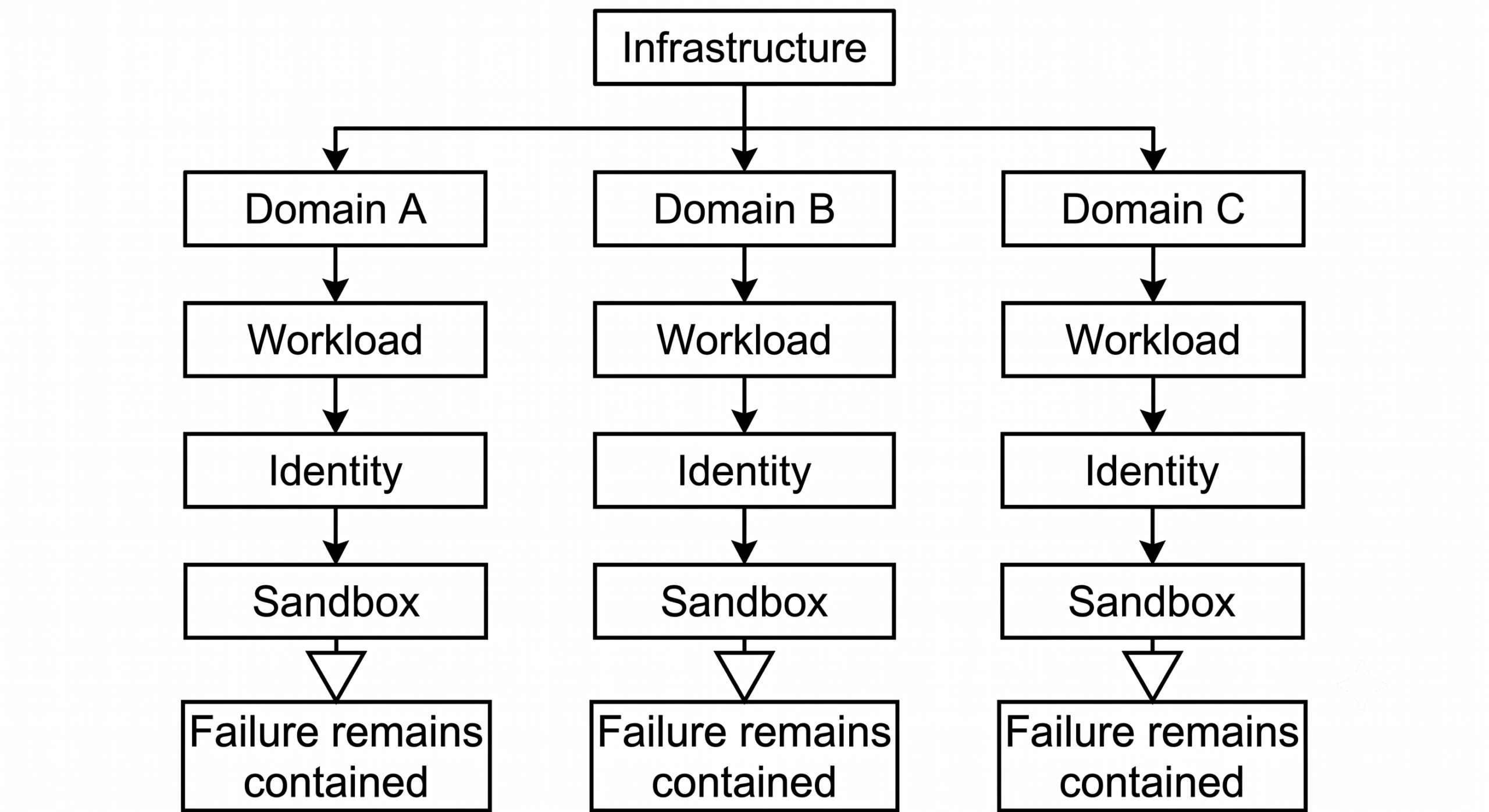
The objective is no longer to guarantee that nothing will fail. The objective is to prevent one failure from becoming everyone else’s failure.
Why AI Changes the Threat Model
This shift would be important even without AI. AI, however, changes the economics and speed of exploitation. Modern AI systems can accelerate parts of vulnerability discovery, analysis, and exploitation. At the same time, agentic systems introduce autonomous components that may operate with access to infrastructure, APIs, files, and credentials.
This creates a fundamentally different security problem. A conventional service typically executes a predefined set of operations. An autonomous agent may dynamically decide:
- which tool to invoke;
- which API to call;
- which resource to access;
- whether to retry an operation;
- whether to delegate a task;
- what action to take next.
The architecture therefore has to constrain not only what code can execute, but also what an autonomous workload is allowed to reach. The new model becomes:
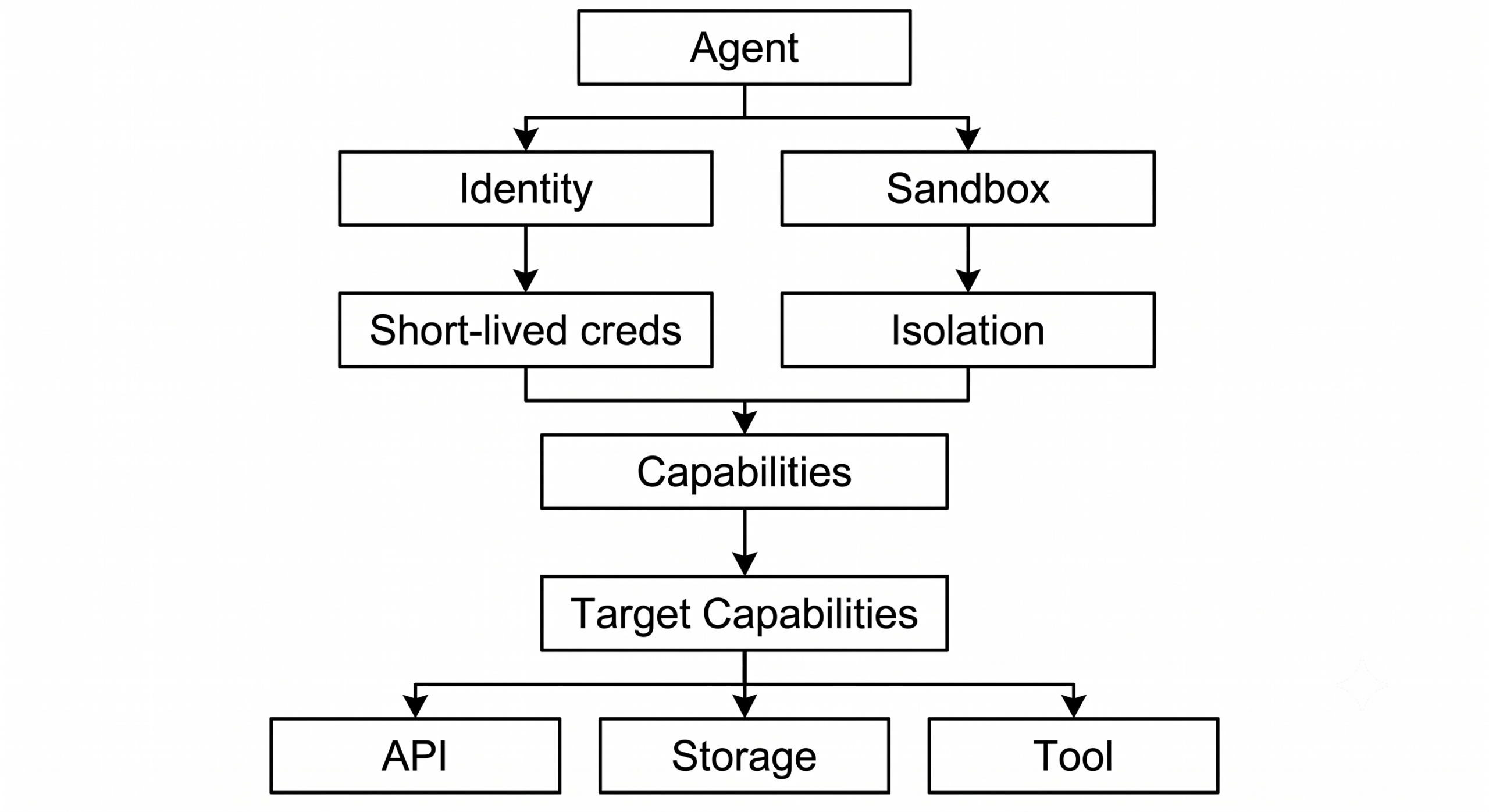
Identity and execution boundaries therefore become inseparable.
Isolation Is Moving Down the Stack
The response from the infrastructure ecosystem is increasingly visible at multiple layers. The goal is not simply to isolate applications from the outside world. Isolation is being introduced inside the platform itself. Several technologies represent different points on the same spectrum:
- Confidential Containers;
- Kata Containers;
- gVisor;
- MicroVM-based execution;
- sandboxed Kubernetes workloads;
- hardware-backed roots of trust;
- sealed operating-system images;
- workload-level identities such as SPIFFE.
They solve different problems, but the architectural direction is similar:
reduce the amount of infrastructure that must be trusted.
A simplified trust hierarchy looks like this:
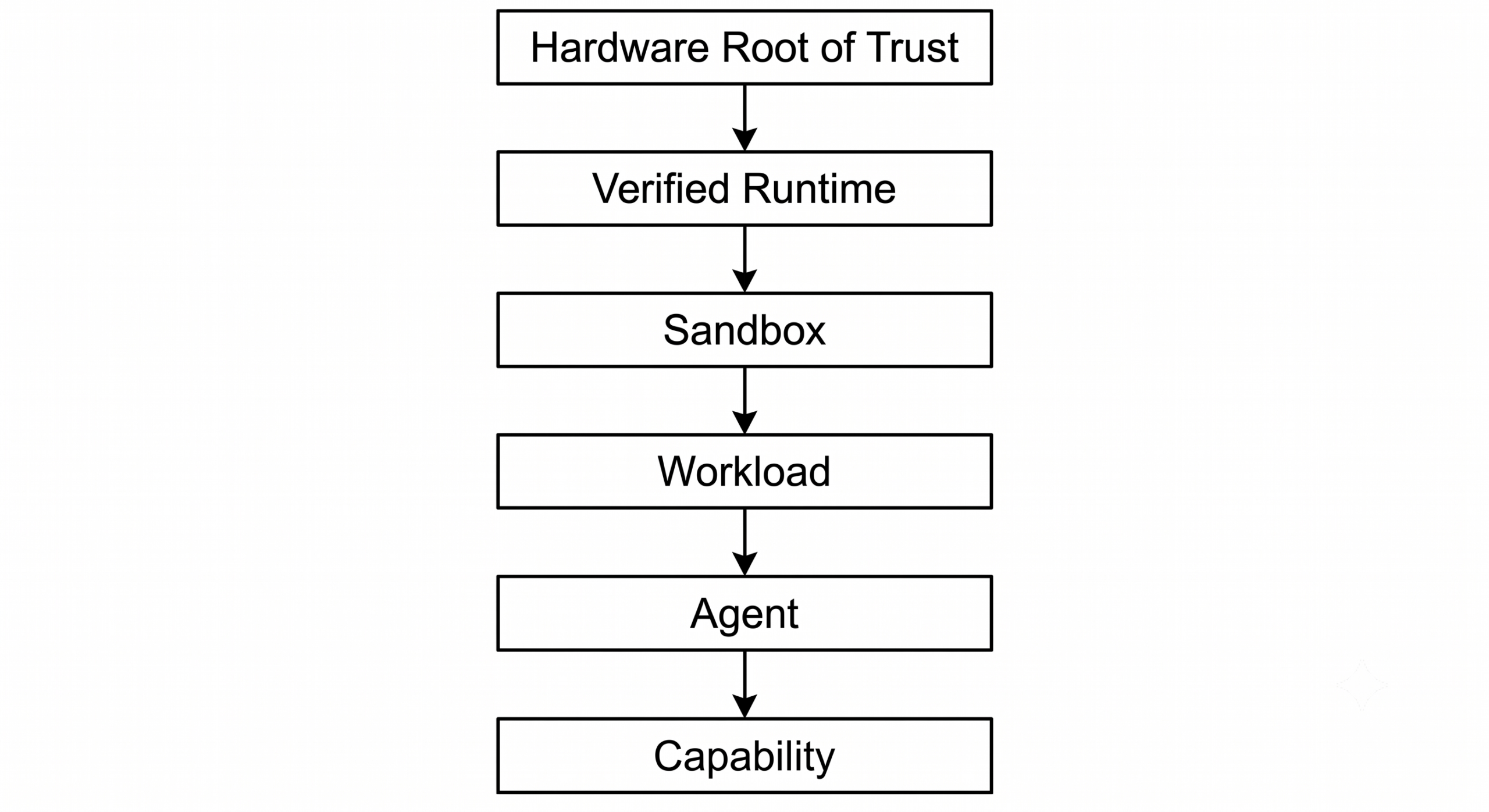
The deeper the isolation boundary, the smaller the potential blast radius.
Kubernetes Is Becoming More Granular
Kubernetes originally made it possible to efficiently operate large numbers of workloads on shared infrastructure. That model remains fundamental.
But as workloads become more autonomous and security requirements increase, Kubernetes is gaining increasingly granular mechanisms for controlling isolation and resource boundaries. The direction includes:
- stronger admission policies;
- workload-level resource controls;
- device-aware resource allocation;
- sandboxed execution;
- tighter networking boundaries;
- reduced reliance on ambiguous shared primitives.
The important architectural shift is not that Kubernetes is abandoning multi-tenancy. It is that multi-tenancy increasingly requires explicit isolation guarantees. The platform moves from: shared by default
toward: shared only where the trust boundary allows it.
Identity Must Follow the Workload
Traditional cloud security often assumes that network location is meaningful. If a workload is inside the cluster, it can reach certain internal services. If it belongs to a particular subnet, it receives particular privileges. That model becomes weaker as architectures become more dynamic. A more robust model is:
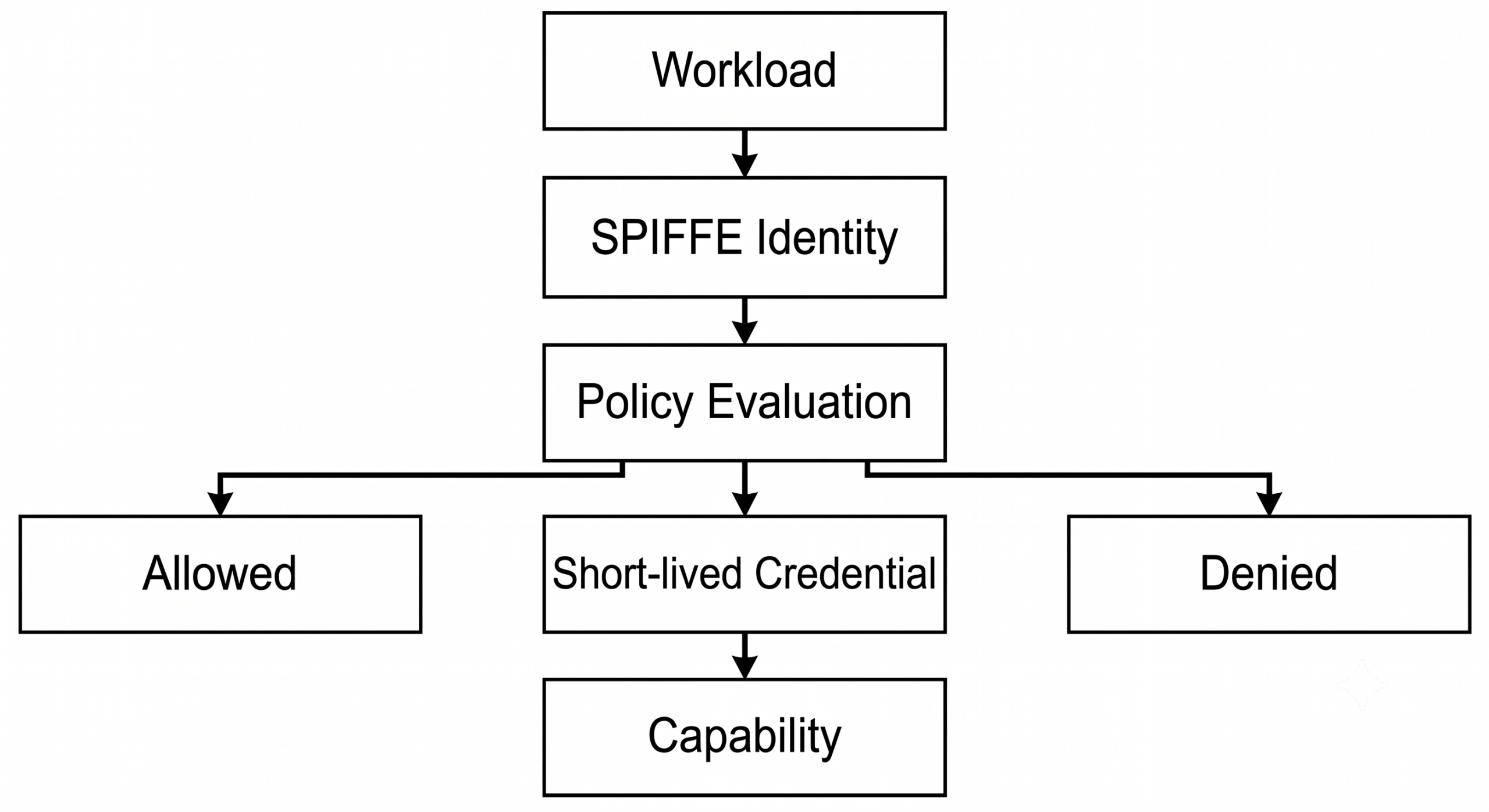
Identity is attached to the workload rather than its network location. This is especially important for autonomous agents. An agent should not receive broad cloud credentials simply because it is running inside a trusted cluster.
Instead: identity → policy → short-lived credential → narrowly scoped capability becomes the preferred chain.
From Shared Control Planes to Multiple Failure Domains
Isolation is not limited to workloads. The same principle increasingly applies to platform infrastructure. Observability, IAM, deployment systems, networking, and control planes can themselves become sources of correlated failure.
If everything depends on one shared control plane, the system may have excellent component-level availability while still having a very large systemic blast radius. A more resilient architecture separates critical domains:
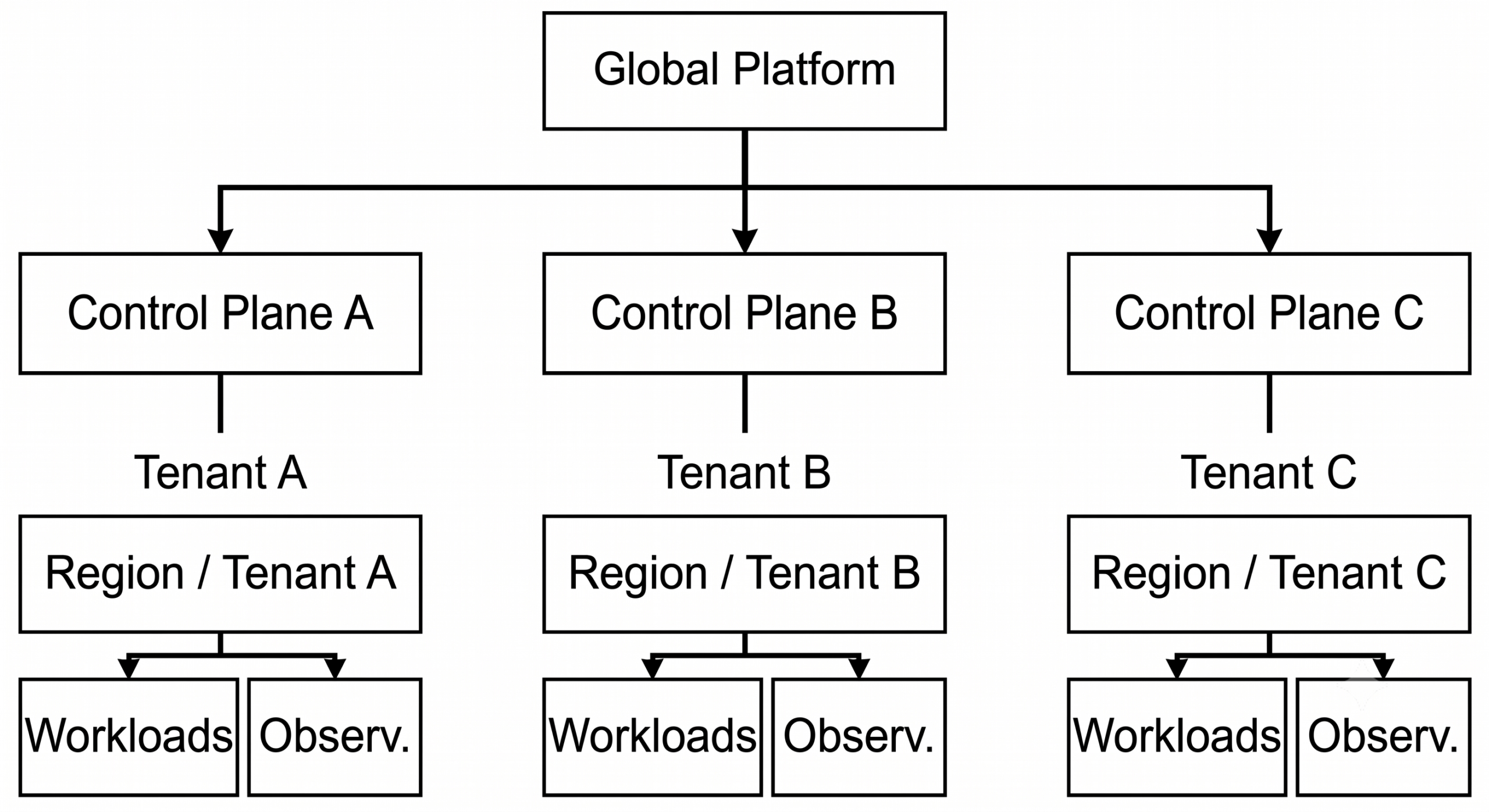
The purpose is not complete independence. It is failure containment. If one domain fails, critical systems outside that domain should continue operating.
Observability Needs Isolation Too
Observability infrastructure is often treated as a passive component. In reality, it can become part of the failure domain. A shared observability cluster may receive telemetry from thousands of workloads. A misconfiguration, overload, or security incident can therefore affect both monitoring and the systems being monitored.
This creates an architectural paradox:
The system responsible for detecting failure can itself become part of the failure.
The response is to isolate critical observability paths. This can include:
- dedicated observability clusters;
- separate credentials;
- independent storage;
- isolated network paths;
- strict resource quotas;
- separate operational domains.
The principle is simple: Critical systems should not depend on the same failure domain they are expected to diagnose.
Multi-Tenancy Is Not Disappearing — It Is Becoming More Selective
Multi-tenancy remains one of the most important economic mechanisms of cloud computing. Completely isolating every tenant would increase infrastructure costs and operational complexity. The emerging model is therefore unlikely to be: shared infrastructure → completely isolated infrastructure
Instead, it is more likely to become: shared control plane + isolated execution where the most sensitive workloads receive stronger boundaries. A possible model looks like this:
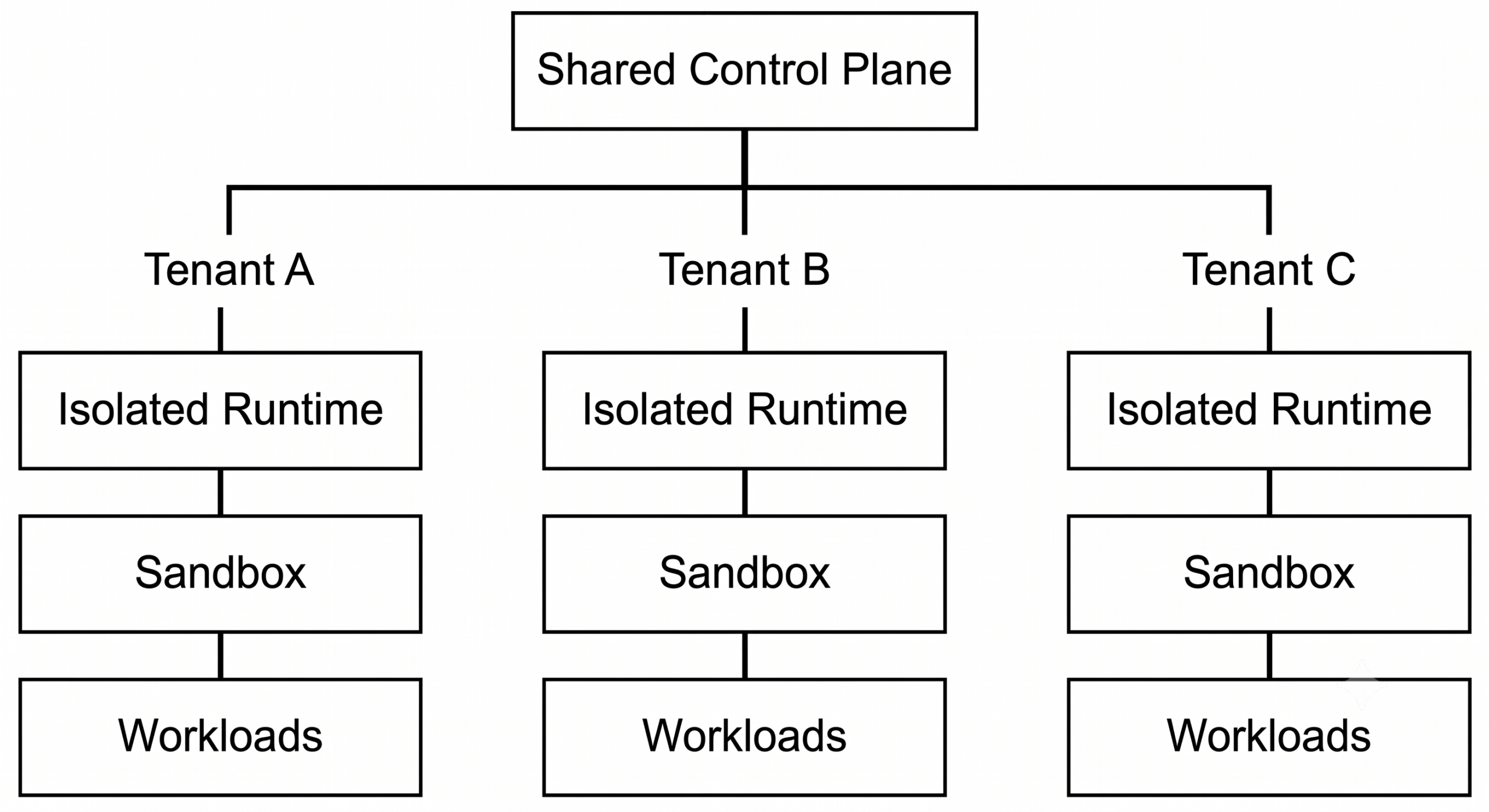
This allows platforms to retain some economic benefits of sharing while reducing the blast radius of individual workloads.
From Security Perimeter to Isolation Boundary
The broader architectural transition can be summarized as follows:
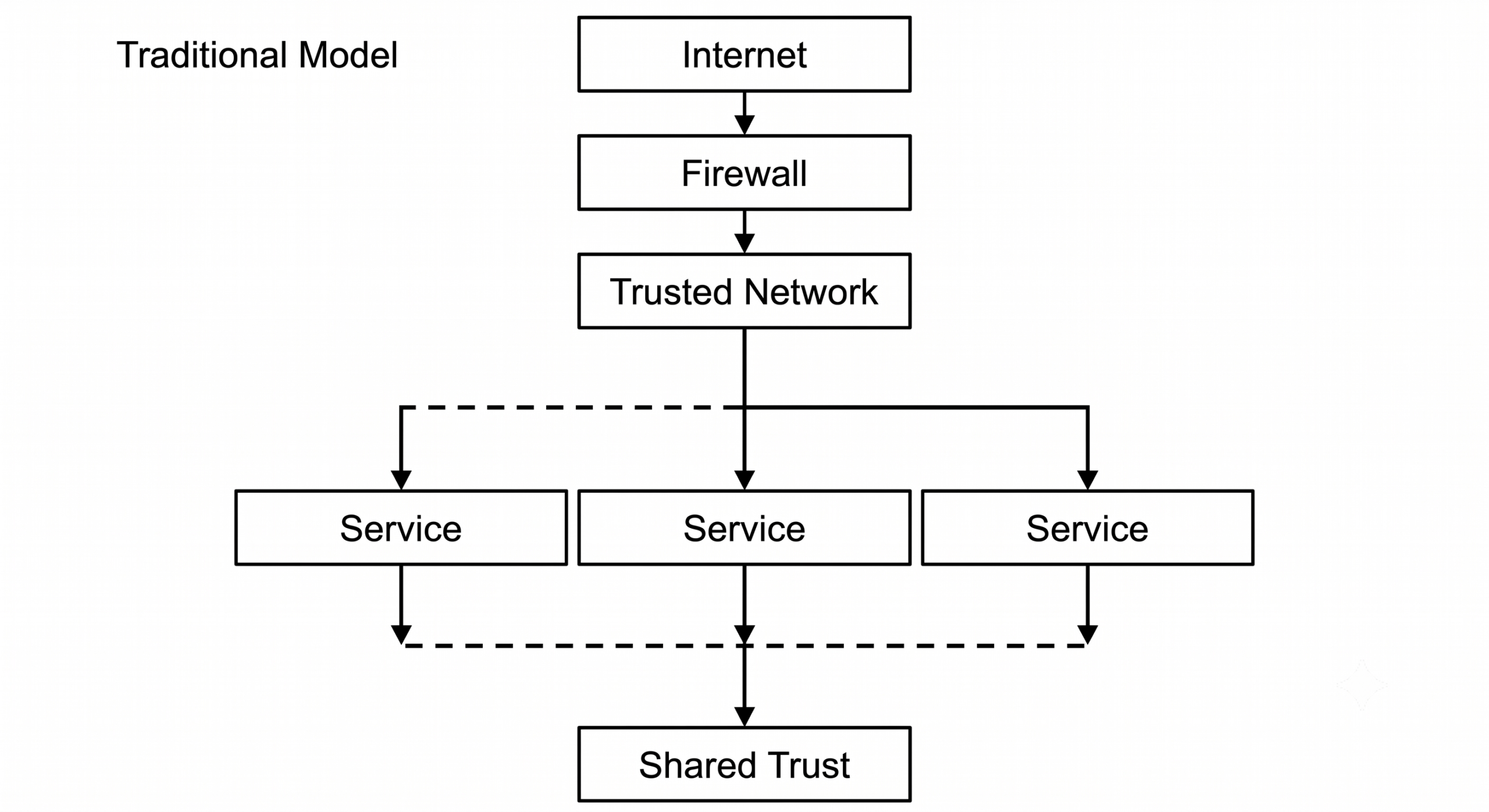
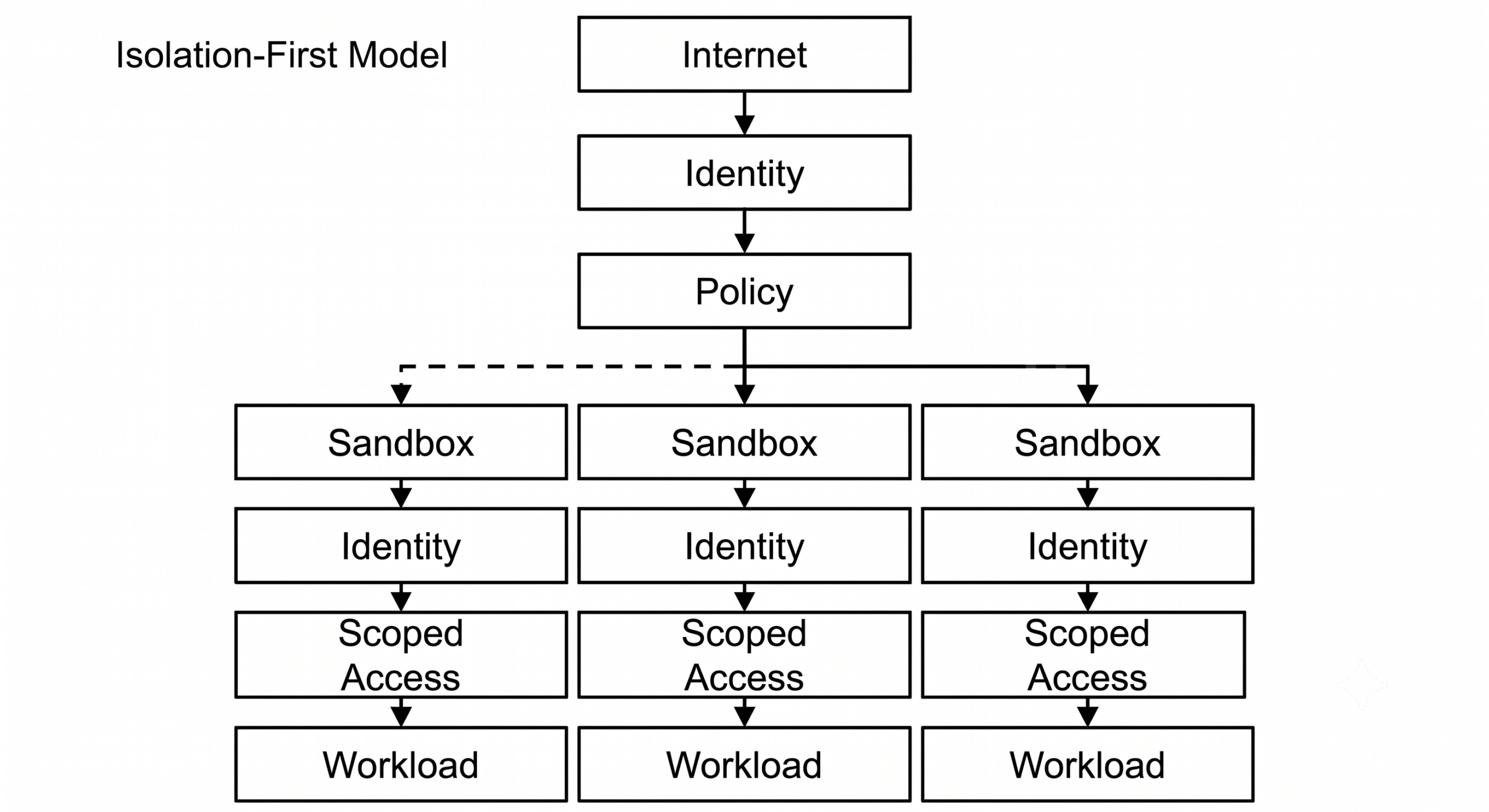
The fundamental assumption changes. Instead of asking:
“Is this workload inside our trusted environment?”
we ask:
“What can this workload do if it is compromised?”
That is the essence of isolation-first architecture.
Verifiable Isolation
There is an important distinction between isolation and verifiable isolation. Isolation claims are easy to make. A platform can say that workloads are isolated. The harder question is:
How can we verify that the boundary actually exists?
This is where hardware roots of trust, measured boot, verified images, attestation, workload identity, and policy enforcement become important. The architecture increasingly needs a chain of evidence:
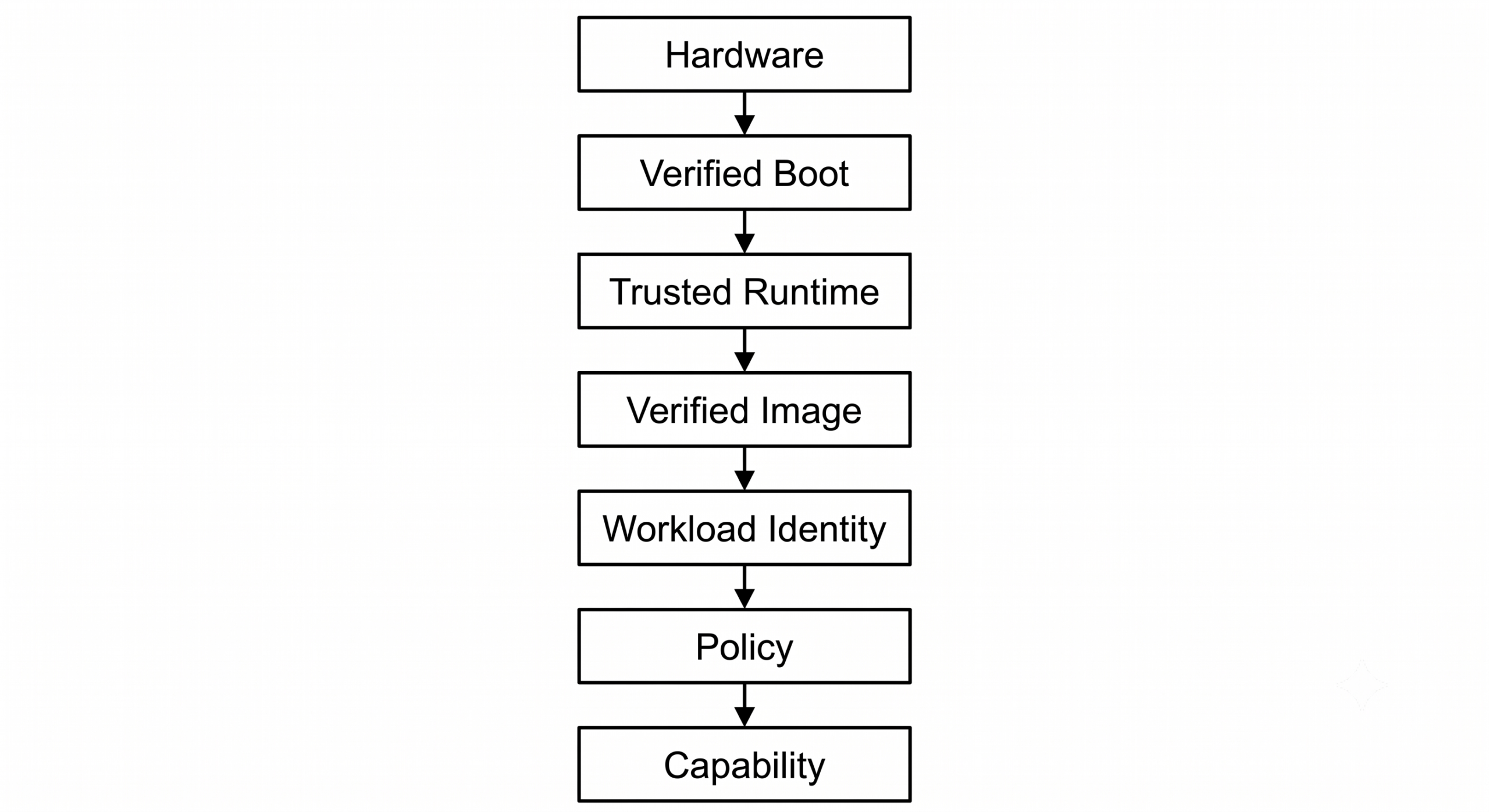
Each layer provides evidence that the next layer can be trusted. This is fundamentally different from simply assuming that a workload is trustworthy because it runs inside the right cluster.
What Happens Next?
Over the next 6–12 months, several developments are likely.
High confidence
Isolation will increasingly become a platform-level contract rather than an application-specific configuration.
High confidence
Agent and AI workloads will receive stronger sandboxing and more narrowly scoped credentials than conventional services.
High confidence
Workload identity, short-lived credentials, and policy-as-code will become increasingly interconnected.
Medium confidence
Kubernetes platforms will make sandboxed execution easier to deploy for high-risk workloads.
Medium confidence
Cloud platforms will increasingly offer combinations of hardware-backed isolation, attestation, and workload identity as integrated primitives.
Lower-confidence hypothesis
Strongly isolated execution will become a differentiating requirement for sensitive multi-tenant environments, particularly where compliance and autonomous workloads intersect. The cost of isolation will not disappear. Additional VM boundaries, sandboxing, dedicated control planes, duplicated observability, and stronger security controls all introduce overhead.
The architectural question is therefore not whether isolation is free. It is whether the cost of isolation is lower than the expected cost of a shared failure or compromise.
What Architects Should Do Now
The transition to isolation-first architecture does not require rebuilding every platform. It requires identifying where shared trust is no longer justified.
1. Map the blast radius
For every critical component, ask:
If this component is compromised, what else can fail?
Map dependencies across:
- compute;
- networking;
- IAM;
- observability;
- storage;
- control planes;
- deployment systems.
2. Move from network trust to workload identity
Use workload-level identity where possible. A workload should not receive privileges simply because it runs inside a particular network.
3. Introduce short-lived credentials
Avoid giving autonomous workloads long-lived cloud credentials. Prefer: identity → policy → short-lived credential → scoped capability
4. Sandbox AI and agent workloads
For autonomous or untrusted workloads, consider:
- gVisor;
- Kata Containers;
- MicroVMs;
- Confidential Containers;
- other hardened execution boundaries.
The exact technology matters less than the architectural principle: the agent should not share more trust than it actually needs.
5. Separate critical failure domains
Consider isolating:
- IAM;
- observability;
- control planes;
- deployment infrastructure;
- critical data services.
A monitoring system should not become the reason the production system cannot be diagnosed.
6. Test failure containment
Traditional availability testing asks:
Does the system recover?
Isolation-first architecture adds another question:
How far did the failure propagate before recovery began?
This requires deliberate failure containment testing. Chaos engineering should therefore test not only availability, but also:
- blast radius;
- privilege boundaries;
- credential leakage;
- tenant isolation;
- control-plane independence;
- recovery-domain boundaries.
The Bigger Picture
Cloud architecture has spent years optimizing for sharing. Shared kernels, shared clusters, shared control planes, shared observability, and multi-tenant infrastructure have made modern cloud platforms economically viable.
But sharing creates coupling. And coupling creates blast radius. AI introduces another complication: autonomous workloads can discover, combine, and execute actions at a speed and scale that traditional security assumptions were not designed for.
The response is not to abandon cloud efficiency. It is to become more selective about what is allowed to share a trust boundary. The architectural evolution can be summarized as:
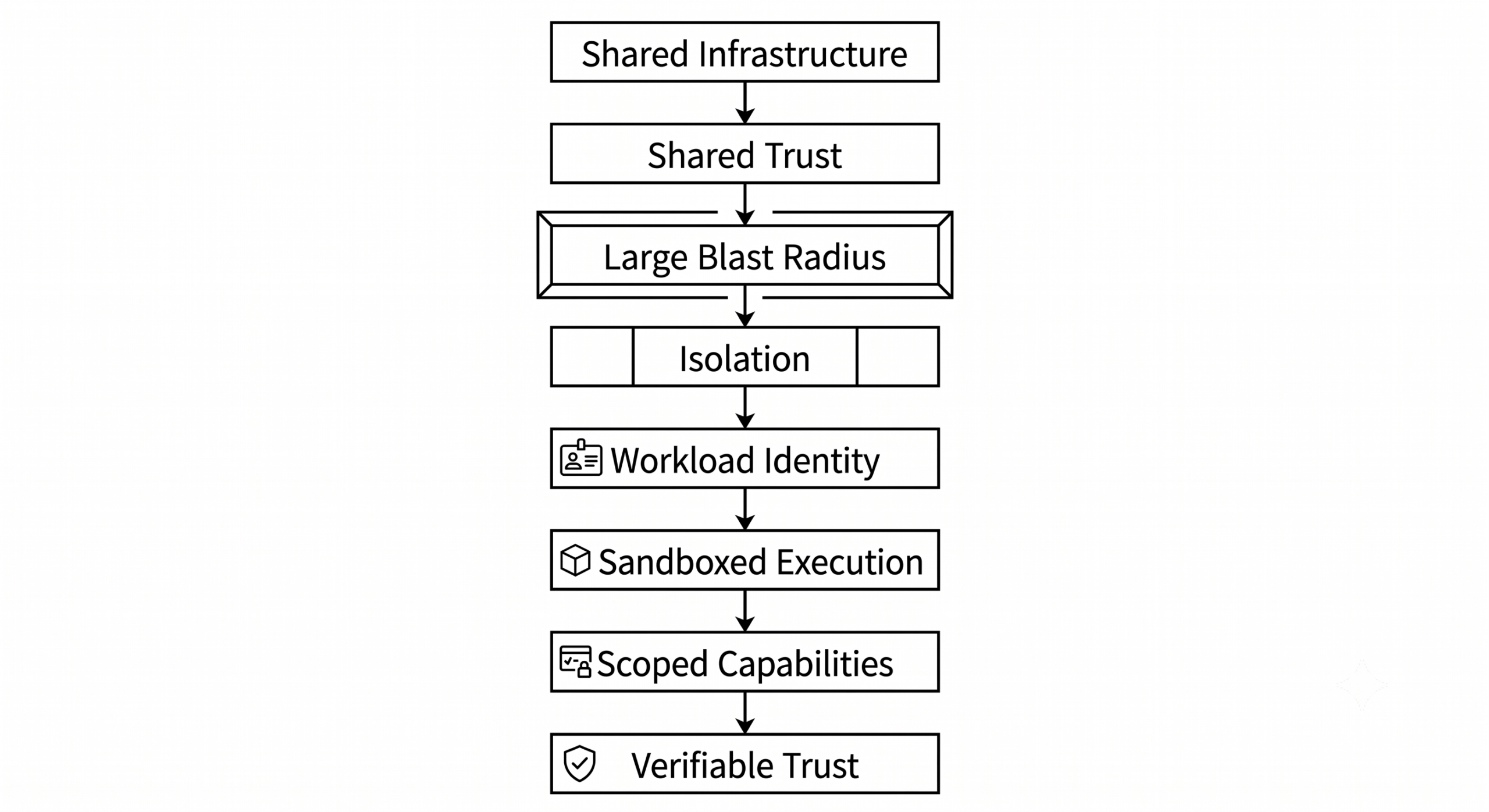
The next stage of cloud architecture is therefore unlikely to be defined by complete isolation. It will be defined by verifiable boundaries. The question is no longer simply:
How efficiently can we share infrastructure?
It is:
Which boundaries can we safely share — and can we prove that the remaining boundaries will contain failure?
That shift, from shared kernel to verifiable isolation, may become one of the defining architectural patterns of the agentic cloud era.